
Integrated LED Lighting Systems for Floating Stairs in Houston, TX
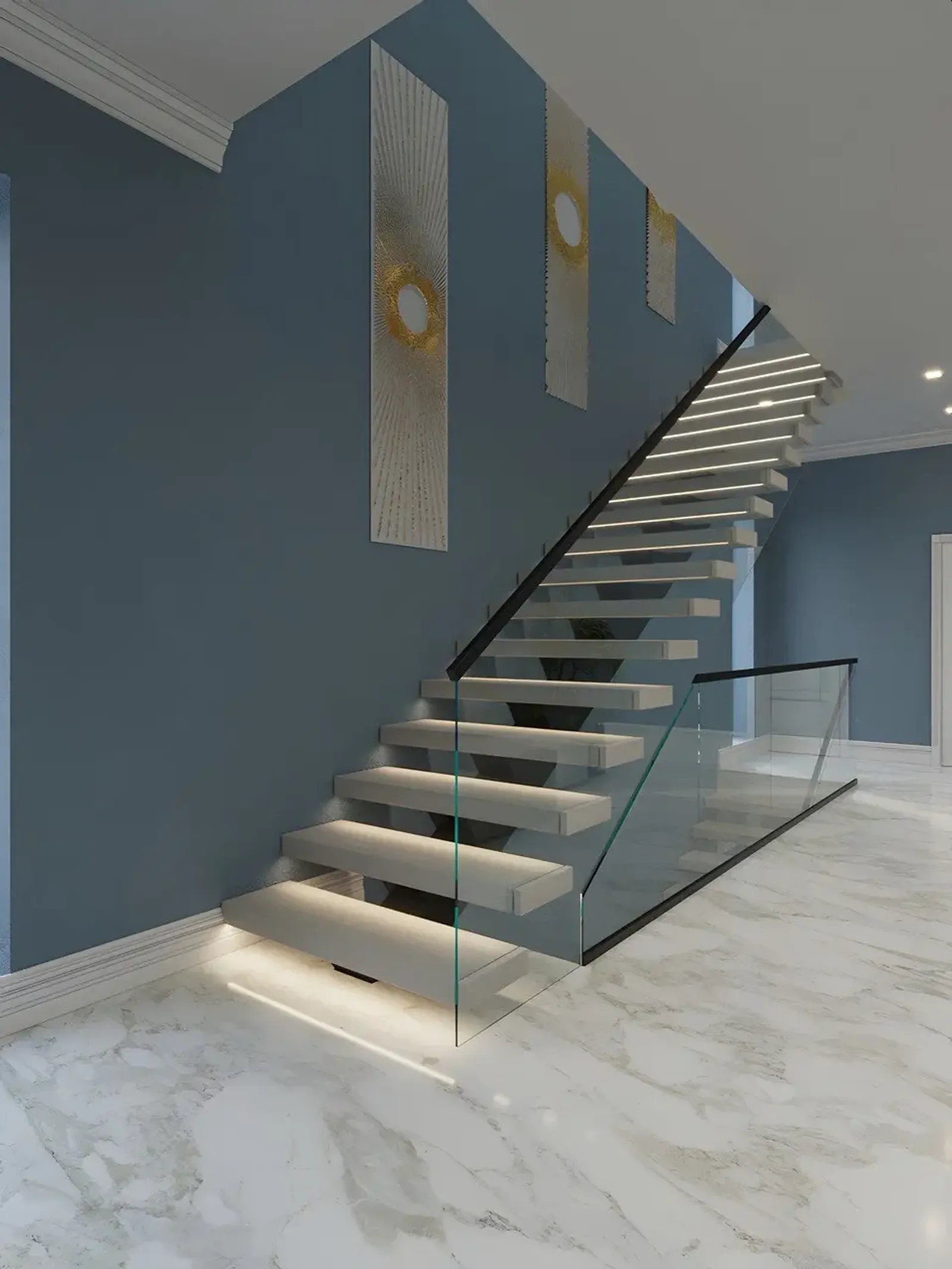
Low-voltage LED routed through hollow stringers with no exposed conduit. Motion-activated and compatible with Control4, Lutron, and other smart home systems.
At Houston Floating Stairs , stair lighting that looks right is invisible when it's off and architectural when it's on. That means no surface-mounted puck lights, no visible conduit, no afterthought LED strips stuck to the underside of treads. The way to achieve that result is to route the wiring through the stringer during fabrication — not try to add it after the stair is installed.
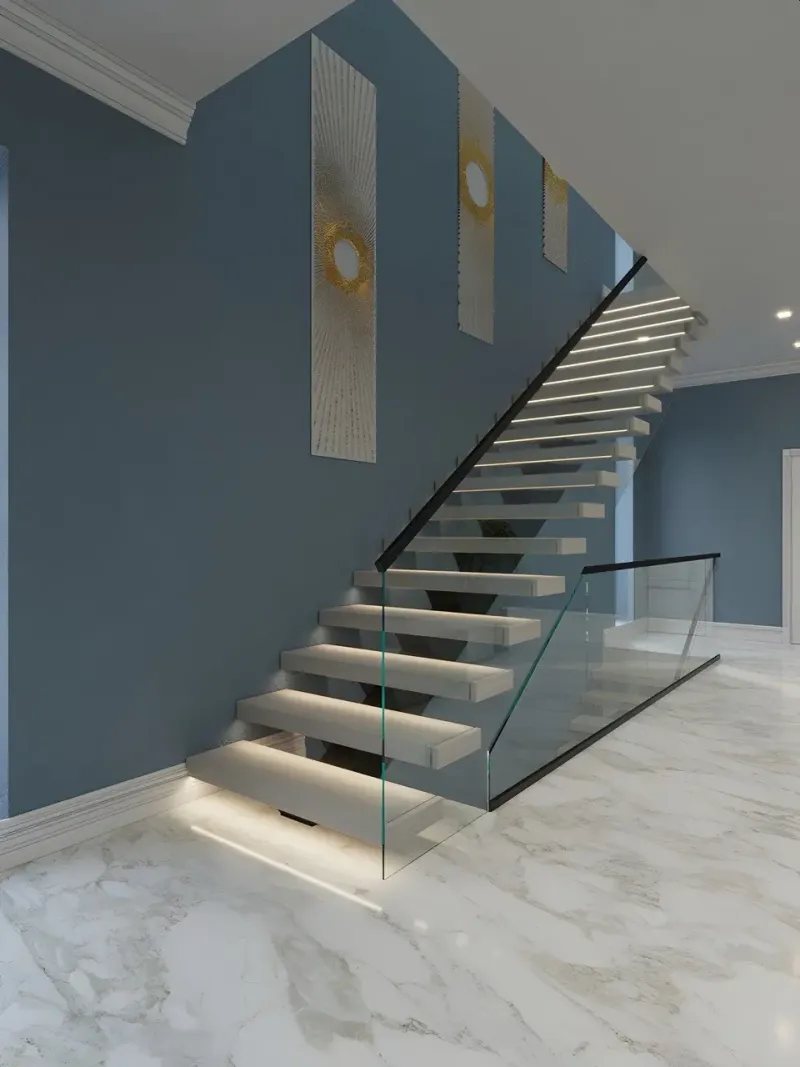
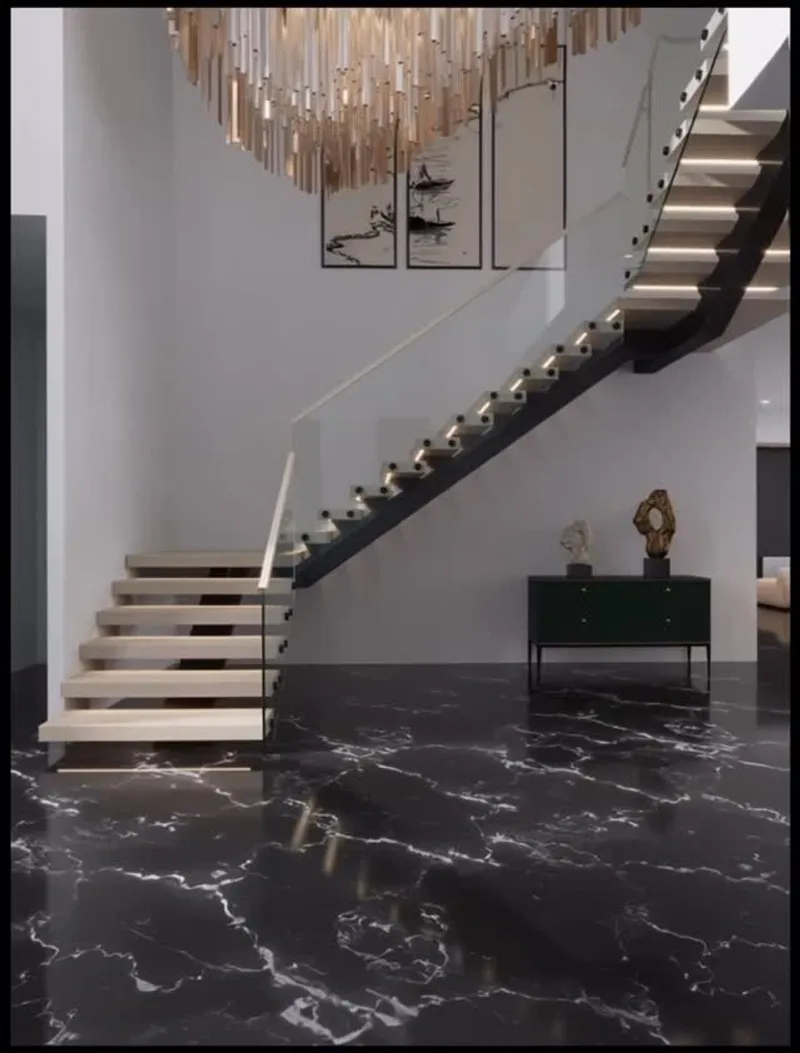
We use hollow structural steel stringers on projects where LED integration is planned. The stringer is fabricated with wire chase routing built in — small apertures at each tread connection point allow the low-voltage wire to exit cleanly into the tread or riser space. The result is a run of light with no visible source hardware from the front view. From the underside of the tread, you see the fixture trim. From the face of the stair, you see light, not wiring.
All fixtures we specify are UL-listed for the application. Low-voltage LED systems in residential use need to be on the right driver and the right transformer capacity. Undersizing the driver causes premature LED failure. We size the driver to the actual fixture count with 20% headroom — not to the minimum the spec sheet suggests.
Motion activation is a popular option on floating stairs, particularly in homes with open-plan living areas where the stair is visible from the main living space. We use PIR sensors mounted discreetly at the top and bottom of the stair run. The sensors have adjustable sensitivity and time-delay settings that we configure during commissioning. They don't trigger from across the room when someone walks through the kitchen.
Smart home integration — Control4, Lutron Homeworks, Crestron, or simpler Lutron Caseta systems — requires coordination between our wiring design and the home automation contractor. We provide low-voltage wiring runs to the smart home panel location and specify the driver and dimmer compatibility before installation. Houston homes with existing Control4 or Lutron systems are easy to integrate. New system installs get coordinated with the AV contractor's schedule.
Ready to get started?
LED integration must be designed before fabrication begins. Contact us early in the process to include lighting in the stringer design.
- ✓ UL-Listed LED Fixtures
- ✓ Smart Home Compatible Wiring
- ✓ No Exposed Conduit Design
- ✓ Motion-Activated Options Available
Integrated LED Lighting Systems — FAQ
Add Integrated LED Lighting to Your Houston Floating Stair
Lighting design happens at the start of the project — not the end. Let's talk now.