
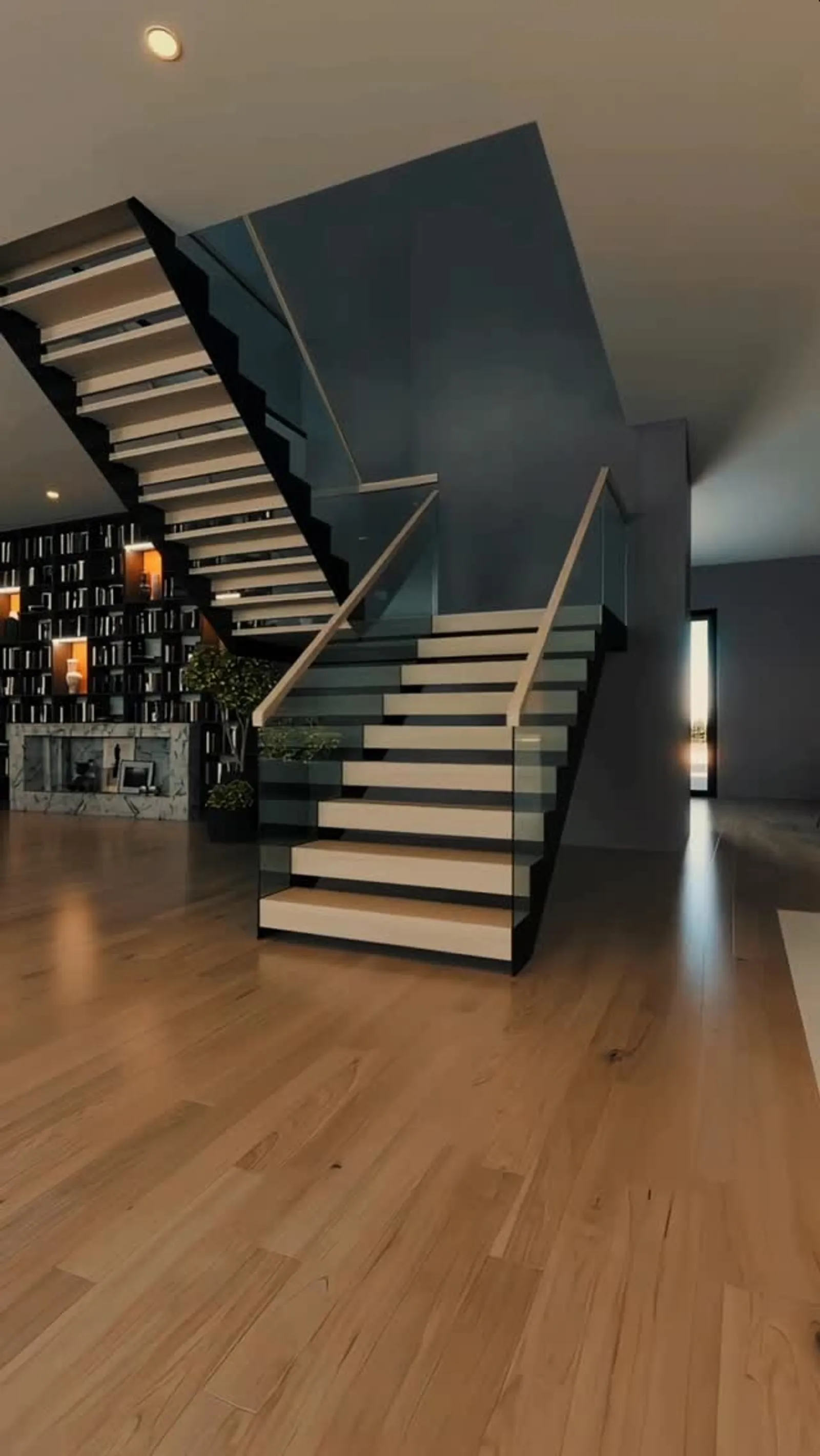
Custom Glass Balustrade Rail Systems in Houston, TX
Frameless and semi-frameless tempered glass panels that protect without blocking the view through your floating staircase. Texas code 42-inch guard height standard.
At Houston Floating Stairs , glass balustrade rail systems are designed alongside the stair — not treated as a separate product ordered from a catalog after the structure is finished. The panel geometry, the mounting system, and the hardware finish all need to be coordinated with the stringer and tread design. A glass rail system that was specified without that coordination tends to have visible gaps, inconsistent reveals, or mounting plates that don't align cleanly with the stringer profile.
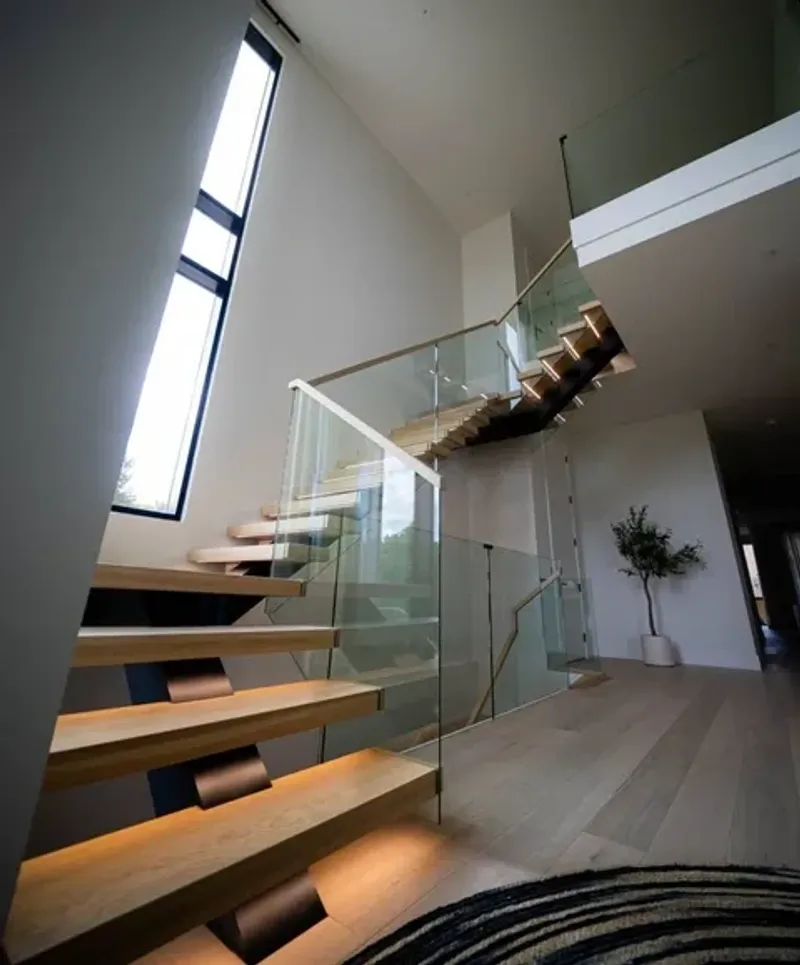
Frameless glass systems use point-fixed standoff hardware anchored directly to the stringer or the tread edge. There's no top rail and no vertical post — just glass panels held by stainless standoffs. The visual effect is maximum openness. The tradeoff is that the anchor points need to be precisely located during fabrication, and the glass panel dimensions have to be exact for the geometry to work. Point-fixed systems are the right choice for clients who want to preserve the visual lightness of the floating stair all the way up the run.
Semi-frameless systems use a continuous channel base — typically stainless or powder-coated aluminum — that runs along the edge of the stringer or tread. The glass panels drop into the channel and are retained by pressure fittings. The channel provides structural rigidity to the panel row, which means the glass can be slightly thinner and panel replacement is easier if a panel is ever damaged. Semi-frameless is also easier to seal against water on exterior applications.
Texas residential code under the IRC requires a minimum 42-inch guard height at open sides of stairs and landings with a floor more than 30 inches above grade. All of our glass balustrade systems are designed to meet that requirement. The 42-inch height is measured from the deck surface to the top of the guard, and our panel sizing accounts for that consistently — we don't leave it to be worked out on-site.
Glass thickness for point-fixed systems is typically 3/8-inch (10mm) tempered laminated glass. For channel-base semi-frameless systems, we often use 1/2-inch (12mm) tempered. Tempered glass is specified for all balustrade applications — it shatters into blunt pebbles instead of sharp shards. We don't use annealed glass on safety applications regardless of cost pressure.
Ready to get started?
Glass rail design is coordinated with your stair design from the start. We spec the hardware, glass, and mounting to your exact stringer geometry.
- ✓ Licensed & Insured
- ✓ Texas IRC 42" Guard Height Standard
- ✓ Tempered Glass Only — No Annealed
- ✓ 316 Stainless Hardware Available
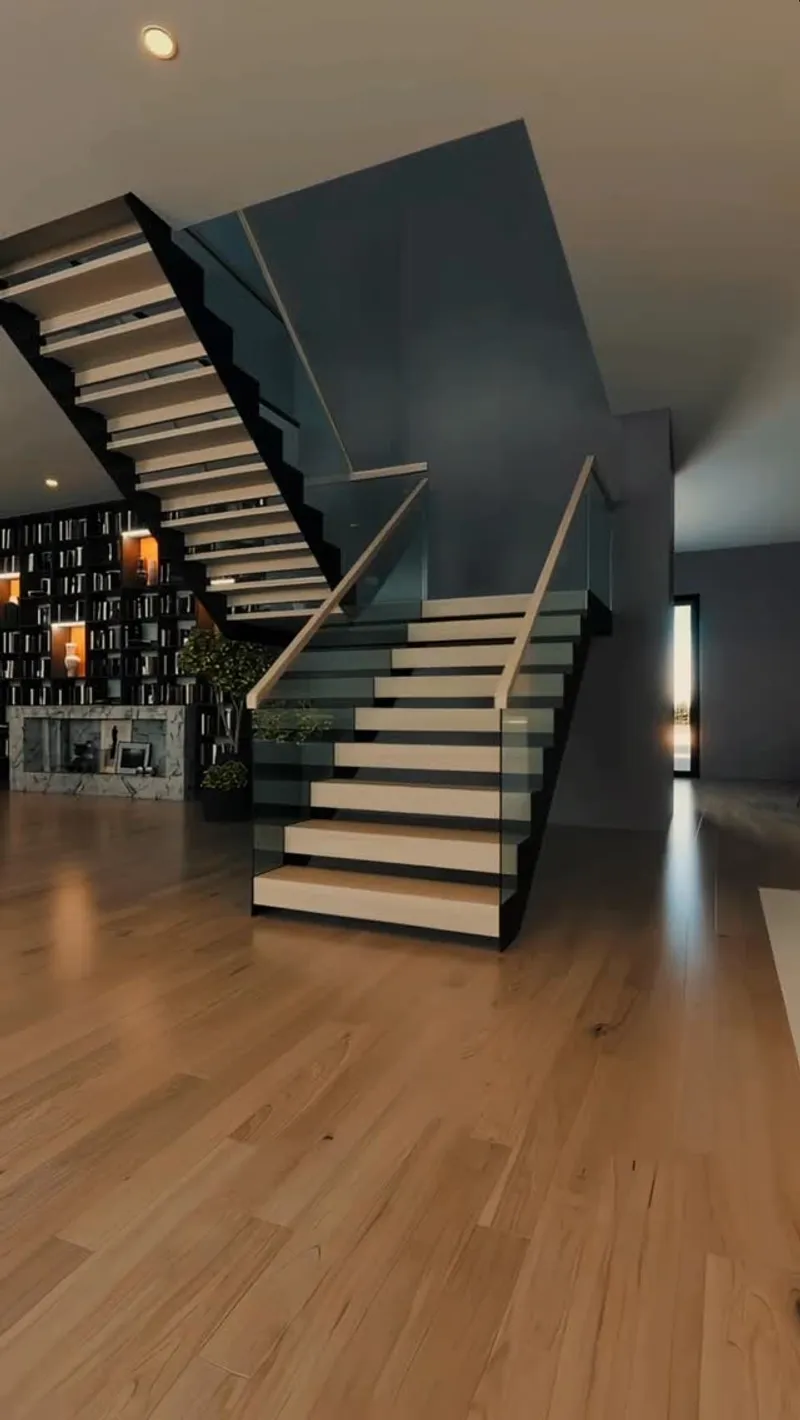
Custom Glass Balustrade Rail Systems — FAQ
Add a Glass Rail System to Your Houston Floating Stair
Frameless or semi-frameless. Sized to your geometry. Code-compliant installation.