

Commercial Office Floating Stairs in Houston, TX
IBC-compliant floating stair systems for Energy Corridor offices, hospitality projects, and Houston retail spaces. Built to commercial live load requirements from the start.
At Houston Floating Stairs , commercial floating stair projects in Houston operate under a different code framework than residential work. The International Building Code (IBC) governs most commercial construction here, and it sets higher live load requirements than the IRC used for homes. A residential floating stair is engineered for 40 pounds per square foot live load. A commercial stair in an office building is typically 100 psf or higher. That difference changes the beam sizing, the anchor pattern, and the hardware specification throughout the system.
We've worked in Energy Corridor office buildings, Galleria-area hospitality projects, and mixed-use developments in Midtown and the Medical Center. The contexts are different — an interior office stair connecting two tenant floors has different site conditions than a hotel lobby statement stair — but the approach is consistent: code-correct engineering from the first drawing, not a residential spec pushed into a commercial application.
Tread width on commercial floating stairs typically runs 48 to 60 inches to accommodate two-way traffic. This width increases the span on the stringer and the torque at each anchor point. We engineer for the actual tread width and load, not for a standard residential stringer that gets longer treads bolted to it. The steel section size goes up meaningfully between a 36-inch residential tread and a 54-inch commercial one.
GC coordination is part of commercial work. We coordinate submittals, RFI responses, and inspection scheduling with the general contractor and the project engineer of record. If there's a structural engineer on the project who needs to approve our connection details, we work through that process — we don't hand a GC a set of drawings and disappear. Commercial projects move on schedules with dependencies, and we understand how to sequence our work within a larger construction timeline.
Hardware on commercial systems is rated for the use. Anchor bolts are sized and embedded to IBC requirements for the specific connection. Railings meet commercial guard height requirements — 42 inches minimum in most commercial occupancies with 4-inch sphere test compliance throughout. We don't carry over residential hardware specs into commercial projects to reduce cost.
Ready to get started?
Commercial floating stair projects start with scope review. If field verification is required, we schedule that step and coordinate with your GC from the first conversation.
- ✓ Licensed & Insured
- ✓ IBC-Compliant Engineering
- ✓ Submittal & RFI Coordination
- ✓ GC Schedule Integration

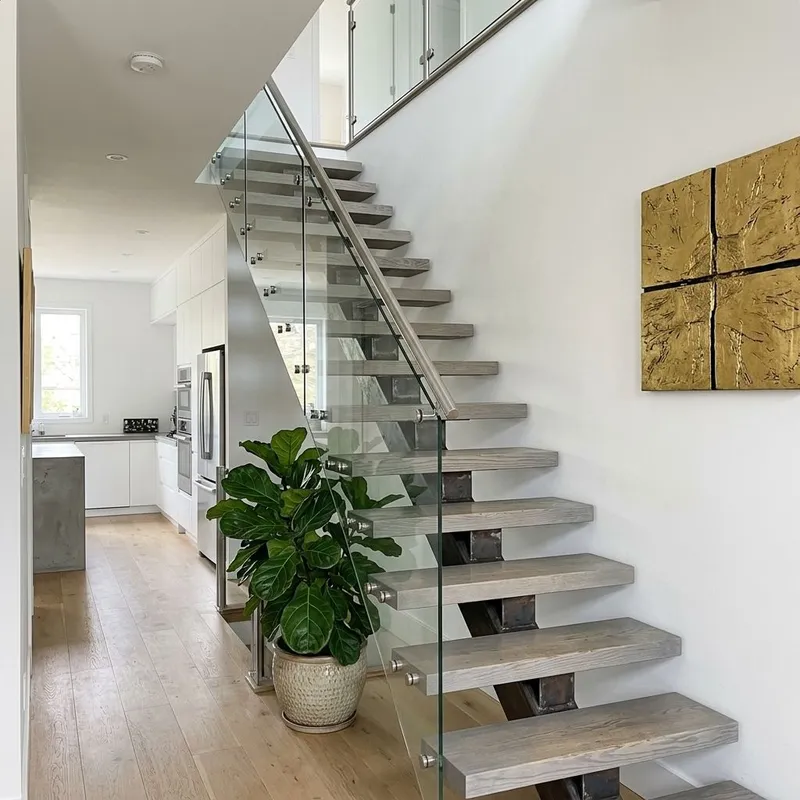
Commercial Office Floating Stairs — FAQ
Start Your Commercial Floating Stair Project in Houston
IBC-compliant design. Submittal documentation. GC coordination from day one.