
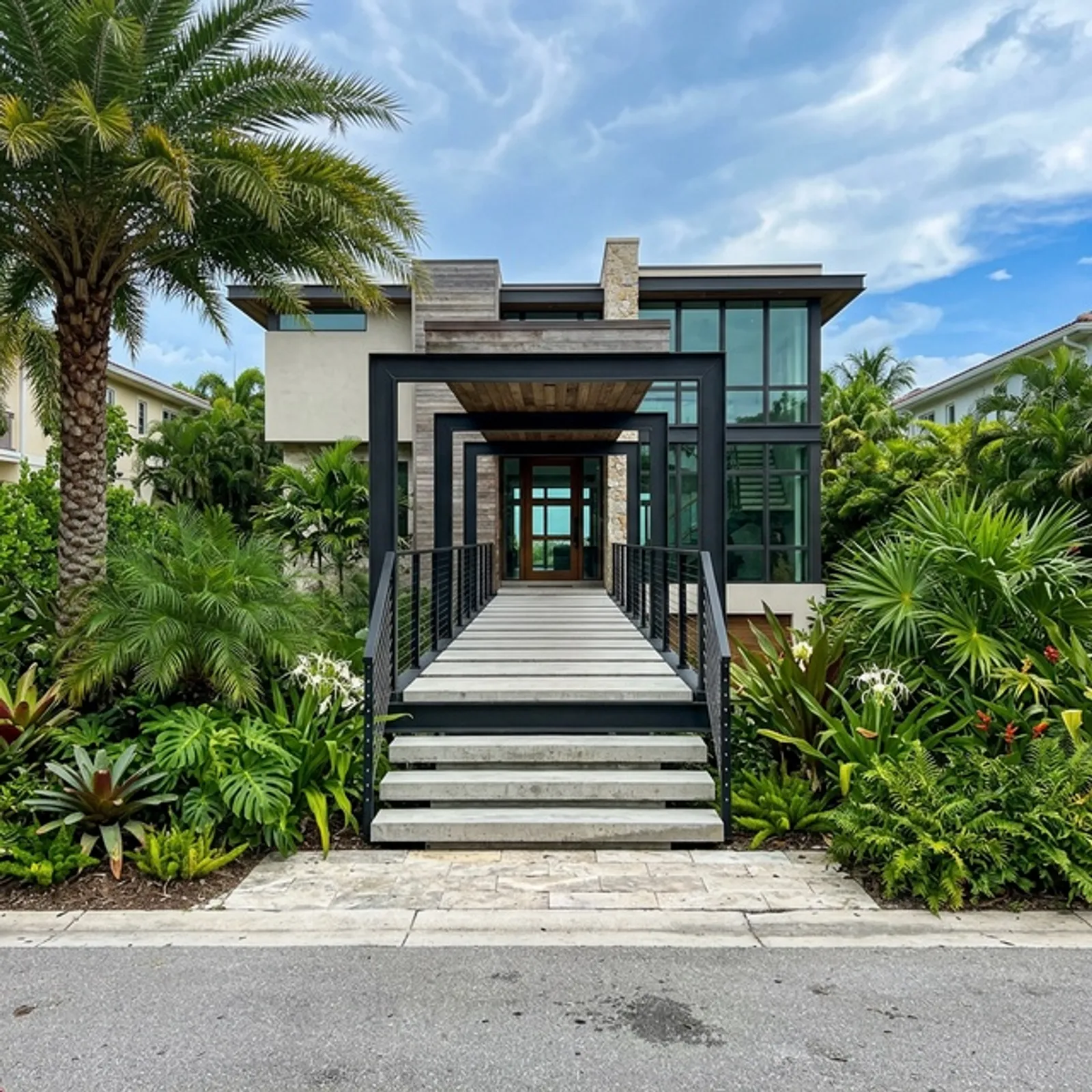
Exterior Houston-Grade Floating Entryways
Outdoor floating stair entries specified for Houston's UV intensity, heat expansion loads, and subtropical humidity — not just designed to look good in the showroom.
At Houston Floating Stairs , exterior floating stair entries are engineered differently than interior ones — because Houston's outdoor environment is unforgiving on materials that weren't chosen for it. Interior floating stairs get AC-controlled conditions for most of their life. Exterior entries get full UV exposure from the south Texas sun, summer temperatures above 100°F, 80–90% humidity in peak months, and seasonal temperature swings that drive significant thermal expansion in steel components.
The structural steel we use for exterior work is the same ASTM A992 grade as interior systems, but the finishing is different. Powder coating on exterior steel uses a two-coat system — a corrosion-inhibiting primer layer and a UV-stable topcoat — rated for outdoor exposure. We don't use interior-grade powder coat on exterior projects. The chemistry is different and the durability gap becomes obvious within two Houston summers.
Thermal expansion in exterior steel stairs is a real engineering consideration in Houston's climate. A steel stringer exposed to full sun in July reaches surface temperatures well above ambient air temperature. We build expansion gaps into all connections and anchor points to allow the steel to move without binding the structure or cracking the concrete slab below. This isn't standard practice at every shop — it should be.
Hardware selection for exterior work defaults to 316 stainless steel at all exposed connection points — not 304, and not zinc-plated carbon steel. In Houston's coastal proximity and high humidity, 304 stainless will show surface rust at hardware edges within a few years. 316 has the molybdenum addition that resists chloride corrosion. It costs more and it's worth it on hardware that's holding a structural load.
Concrete slab foundations under exterior stairs in Houston need drainage consideration. The city's heavy rainfall events saturate the ground rapidly. We design anchor details that don't create standing water traps at the base of the stringer, and we specify anchor bolt depth and epoxy rated for wet concrete conditions. The slab anchor detail is where exterior stair longevity is either protected or compromised — we don't leave it as an afterthought.
Ready to get started?
We assess the site, review the slab condition, and spec materials for Houston's outdoor environment before any design work begins.
- ✓ Licensed & Insured
- ✓ 316 Stainless Hardware Standard
- ✓ UV-Rated Two-Coat Powder Finish
- ✓ Harris County Permit-Ready Documentation
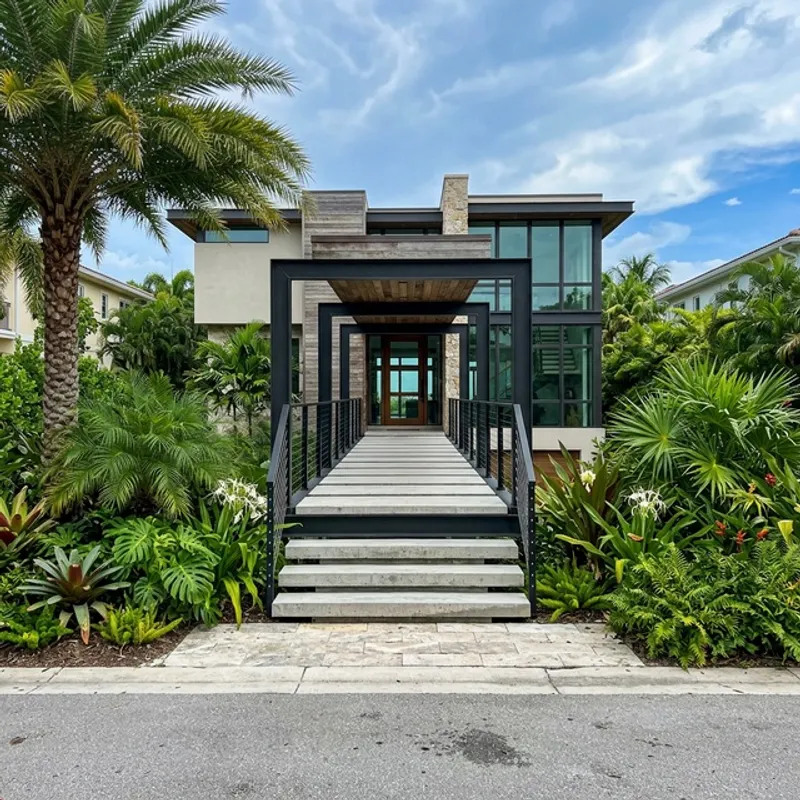
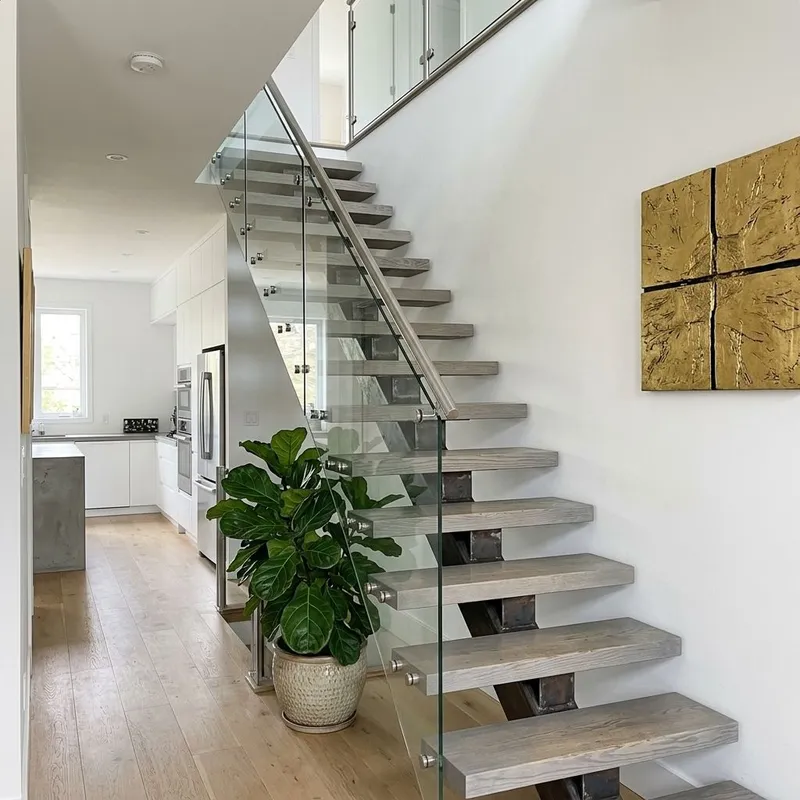
Exterior Houston-Grade Floating Entryways — FAQ
Start Your Exterior Floating Entryway Project in Houston
Site assessment. Material spec for Houston conditions. Permit documentation included.